Laser for glaucoma

Selective Laser Trabeculoplasty
(SLT) for Glaucoma

SLT is a laser used to lower intraocular pressure in selected cases of glaucoma. Understand how it works, when it may be indicated, what the procedure is like and what the precautions and limits of the treatment are.

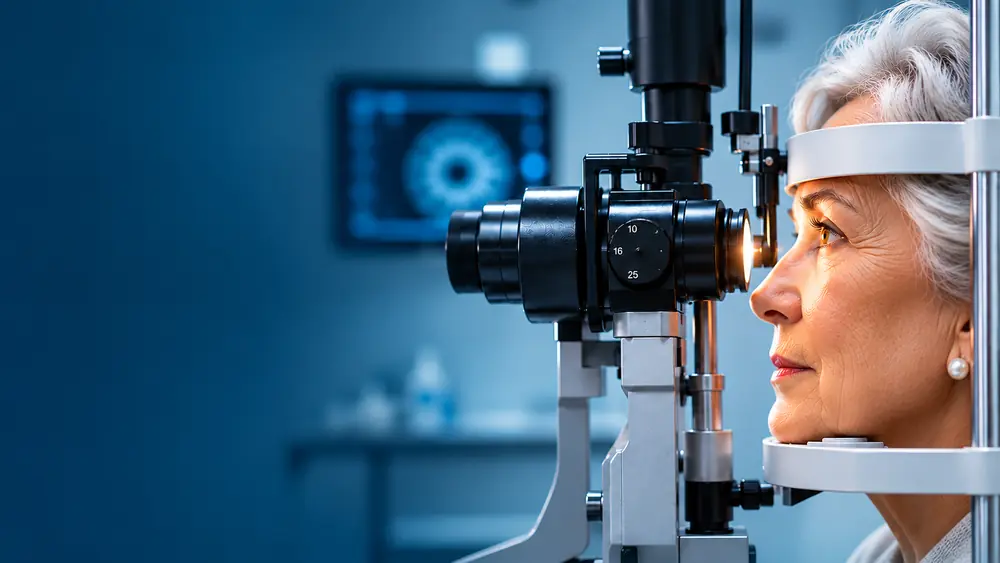
Patient during an eye exam with a slit lamp
Overview

What SLT is

Selective laser trabeculoplasty (SLT) is a procedure in which a low-energy laser is applied to the trabecular meshwork, the area through which the aqueous humor drains from the eye. The goal is to improve this drainage and, in this way, lower intraocular pressure.

The laser acts selectively on pigmented cells of the trabecular meshwork, without cutting and without destroying the surrounding tissue. For this reason it is considered a minimally invasive procedure.

Indication

Who SLT may be indicated for

The indication is always individual and depends on the type of glaucoma, the stage of the disease and the exams of each eye.

Situations in which it may be considered

SLT is usually considered in:

  • open-angle glaucoma and ocular hypertension, in selected cases;
  • patients who need to lower pressure further beyond eye drops;
  • patients who have difficulty using or do not tolerate eye drops;
  • some patients as a first treatment option, at the doctor's discretion.

When it may not be the best option

SLT may not be suitable in:

  • angle-closure glaucoma and other specific types;
  • eyes in which the drainage angle cannot be adequately seen;
  • some advanced cases, in which a greater drop in pressure is needed;
  • situations with active eye inflammation, among others evaluated by the doctor.
Procedure

How SLT is done

In general, SLT is performed as an outpatient procedure, without a hospital stay. The usual steps are:

1. Preparation

Anesthetic eye drops are applied and, sometimes, a drop to help prevent a rise in pressure right after the laser.

2. Laser application

With a lens resting on the eye, the laser is applied to the trabecular meshwork. The patient may see flashes of light and feel slight discomfort.

3. Duration

It usually takes a few minutes per eye. In some cases, part of the meshwork is treated in one session and another part in another.

4. Pressure check

Pressure may be measured some time after the laser, before discharge, and the doctor schedules a return for reevaluation.

Safety

Possible effects and risks

SLT is usually well tolerated, but, like any procedure, it can have unwanted effects. The most common are temporary:

  • blurred vision and sensitivity to light for a few hours or days;
  • mild discomfort or a gritty sensation;
  • mild eye inflammation, treated with eye drops;
  • temporary rise in intraocular pressure in the first hours, which is why pressure is reevaluated.

Serious complications are rare. Any intense pain, significant worsening of vision or a very red eye after the laser should be reported to the doctor immediately.

Expectations

Results and limitations

The effect of SLT is not immediate: the response is usually evaluated after a few weeks. Not every eye responds to the laser.

When there is a response, pressure tends to drop, but the effect may fade over months or years and, in some cases, the laser may be repeated, at the doctor's discretion. SLT does not cure glaucoma and does not replace regular follow-up; many patients still need eye drops.

After treatment

Recovery and follow-up

In general, recovery is quick and usual activities are resumed shortly, as guided by the doctor. An anti-inflammatory eye drop may be prescribed for a few days.

The return visit to measure pressure is scheduled in the first hours, days or weeks, depending on each case. Afterward, glaucoma continues under regular follow-up, with periodic exams, because it is a chronic disease.

Comparison

SLT and other treatments

SLT is one of the options in glaucoma treatment. Each one has a different role, advantages and limits:

Eye drops

Daily and continuous use; they depend on consistency and can cause local effects. In many cases, they are the first step.

SLT laser

A quick procedure, without cuts; the effect varies between patients and may fade over time.

Surgery

Considered when eye drops and laser do not control pressure; it usually has a greater effect, with more care required after surgery.

"Vision is quality of life."

Schedule an evaluation to understand the options for controlling eye pressure and the best path to preserve your vision.

FAQ

Frequently Asked Questions About SLT

Short answers to the most common questions. They do not replace an evaluation by an ophthalmologist.

Does the SLT laser hurt?

In general, no. Anesthetic eye drops are used and the patient may notice flashes of light or slight discomfort during the application.

How long does the effect of SLT last?

It varies from person to person. The effect may last for months or years and tends to fade over time. Regular follow-up shows whether it is necessary to add eye drops or repeat the laser.

Does SLT cure glaucoma?

No. Glaucoma is a chronic disease. SLT can help lower intraocular pressure, but follow-up remains necessary.

Can I stop my eye drops after SLT?

Not on your own. Only the ophthalmologist can decide whether eye drops can be reduced or stopped, based on pressure and follow-up exams.

Is SLT suitable for all types of glaucoma?

No. It is most often used in open-angle glaucoma and ocular hypertension. Other types of glaucoma may require different approaches, defined during the evaluation.

Is a hospital stay needed for SLT?

In general, no. The procedure is usually done as an outpatient, and the person goes home the same day.

Dr. Tiago Prata in his office

Specialist

Dr. Tiago Prata

CRM: SP 109791

Professor in the Department of Ophthalmology at the Escola Paulista de Medicina - UNIFESP.

Has extensive clinical and surgical experience in Glaucoma and Cataracts.

Ophthalmologist trained at the Escola Paulista de Medicina - UNIFESP, where he also completed his glaucoma specialization. He earned his PhD and postdoctoral degrees in Ophthalmology and Visual Sciences from UNIFESP/EPM.

He completed his postgraduate training in clinical glaucoma research in New York - United States, at the New York Eye and Ear Infirmary / New York Medical College.

He is currently an Affiliate Professor and Postgraduate Advisor in the Department of Ophthalmology at UNIFESP/EPM, working in the Glaucoma Service since 2006.

He has been an Associated Researcher at Mayo Clinic in the USA since 2018 and a director of the Brazilian Glaucoma Society since 2015.

Other Treatments

Cataract Surgery

Cataract surgery is a safe and effective procedure to restore vision impaired by clouding of the lens.

Learn More

Glaucoma Treatment and Surgery

Eye drops, laser and surgery: how glaucoma treatment is chosen to control intraocular pressure.

Learn More

Oculoplastics

Indicated for functional and aesthetic cases, the technique respects the delicate anatomy of the eye area.

Learn More

Childhood Glaucoma

Compassionate care for children, prioritizing safe interventions to preserve vision from an early age.

Learn More

About this content

Published by
Prata Ophthalmology

Informational content that does not replace a medical appointment. Diagnosis and treatment depend on individual evaluation.

Testimonials

What Our Patients Say

★★★★★

“Attentive, clear and well-prepared professional. What won me over most was how he explained that, even with a diagnosis that has no cure, there are ways to try to stabilize the disease.”

Maggy de Alcântara

★★★★★

“Glaucoma is a frightening disease. For years I have been treated by Dr. Ana, who gives me security and peace of mind. Besides being an excellent specialist, she is a unique human being. Only gratitude!”

Fátima Vasco

★★★★★

“The doctor described my case with great expertise from the first appointment. I had laser in both eyes and the pressure went back to normal, exactly as she explained.”

Roberto Signorelli

Schedule your appointment