Treatment for
Childhood Glaucoma in São Paulo
Focusing on early diagnosis and continuous follow-up, Dr. Ana Luiza Scoralick (CRM-SP 185850; RQE 64994) treats children with congenital or acquired glaucoma, offering a safe and individualized approach.
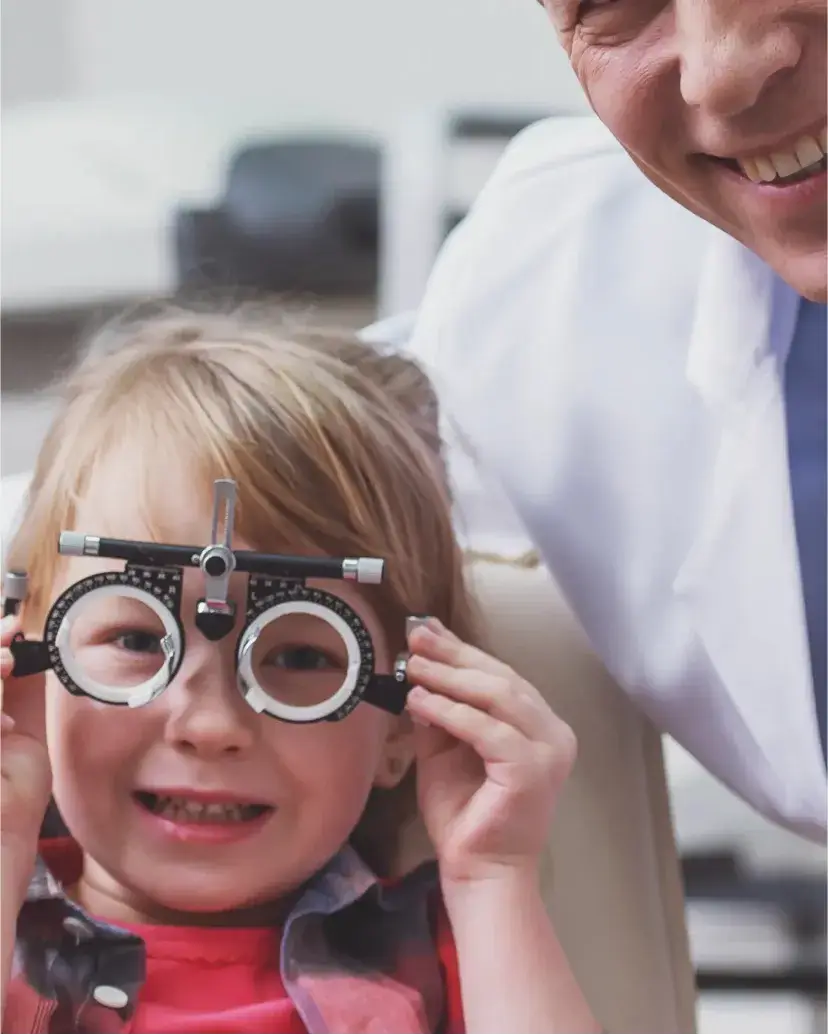
Early diagnosis
changes the prognosis
CHILDHOOD GLAUCOMA IS A RARE AND SERIOUS DISEASE THAT CAN APPEAR IN THE FIRST MONTHS OF LIFE, BEING ONE OF THE MAIN CAUSES OF BLINDNESS IN CHILDHOOD.
It often occurs due to changes in the aqueous humor drainage system, elevating intraocular pressure and increasing the risk of optic nerve damage.
The most common type is primary congenital glaucoma. When identified early and treated with proper technique, it is possible to reduce the risk of visual sequelae and support visual development.
Safety and continuous follow-up
for developing vision
In many cases, treatment involves specialized surgery to normalize intraocular pressure and protect the optic nerve. The approach is individualized and planned for each child and family.
The earlier care is started, the greater the chances of preserving visual potential. Postoperative follow-up is close, with clear guidance for the parents or guardians.
What are the types of Childhood Glaucoma?
Congenital
Present from birth.
Early childhood
Appears in the first months of life.
Secondary
Resulting from other ocular diseases or genetic syndromes.
Common signs include tearing, light sensitivity (photophobia), enlargement of the eyes (buphthalmos), and corneal clouding.
Early diagnosis is essential to prevent irreversible complications.
How is the treatment?
In most cases, the treatment of childhood glaucoma requires early surgical intervention, as eye drops used in adults are not always sufficient or appropriate for children.
Dr. Ana Luiza performs specialized procedures, such as:
- Goniotomy
- Trabeculotomy
- Drainage device implantation
The technique is chosen according to the severity of the case, the child's age, and clinical response. Postoperative follow-up is continuous to control intraocular pressure and support visual development.
What we aim for with treatment
1) Reduce and stabilize intraocular pressure.
2) Protect the developing optic nerve.
3) Preserve visual potential and follow up in the long term.
4) Guide the family with clarity and continuous support.
Training and research applied to child care
UNIFESP/EPM — focus on risk factors and progression of glaucoma, pressure fluctuation, and analysis of intraocular parameters.
Training in glaucoma and cataracts, with advanced training in congenital/childhood glaucoma (UNIFESP/EPM).
Surgical preceptor for residents and fellows (OPHTHAL — SP), with scientific production in indexed journals and peer review.
What are the signs and symptoms?
Parents and pediatricians should be alert: faced with any persistent sign, it is worth investigating early.
- Tearing
- Itching in the eyes
- Red eyes
- Difficulty opening eyes in a bright environment
- Bluish appearance / corneal clouding
When to seek evaluation?
If you notice any persistent change (especially in babies and young children), seek specialized evaluation to confirm or rule out childhood glaucoma and start care as soon as possible.
"Early diagnosis changes everything."
In childhood glaucoma, acting early is essential to preserve developing vision and reduce the risk of sequelae.
Frequently Asked Questions
We know that receiving a suspicion or diagnosis of childhood glaucoma can raise questions.
Below, we have gathered objective answers to guide you and your family.
What is childhood glaucoma?
It is a rare and serious condition that can appear in the first months of life and is often associated with changes in the aqueous humor drainage system, elevating intraocular pressure and putting the optic nerve at risk.
Which signs deserve attention?
Tearing, red eyes, itching, light sensitivity, difficulty opening eyes in bright environments, and changes such as a bluish appearance/corneal clouding should be evaluated quickly.
Is there a cure for childhood glaucoma?
It is a chronic condition, but it can be controlled. The goal of treatment is to reduce intraocular pressure, preserve the optic nerve, and support visual development with continuous follow-up.
How is the treatment?
In most cases, the approach involves early surgery. Eye drops used in adults may not be sufficient or appropriate for children. The technique is chosen individually by the specialist.
Which surgeries may be indicated?
Techniques such as goniotomy, trabeculotomy, and drainage device implantation may be indicated. The decision depends on the child's age, severity of the case, and clinical response.

Dr. Ana Luiza Scoralick
• CRM: SP 185.850 • RQE: 64 994
Specialist in adult and congenital glaucoma, clinical and surgical. With experience in humanized care and scientific research.
Academic Education
- Medical degree from the Federal University of Juiz de Fora (UFJF) – MG.
- Medical residency in Ophthalmology at Santa Casa de Belo Horizonte.
- Completed a clinical-surgical fellowship in Congenital Glaucoma at the Instituto de Olhos das Ciências Médicas, also in Belo Horizonte.
- Completed a Master's degree in Ophthalmology and Visual Sciences at UNIFESP/EPM (2019), acting as a preceptor in the Congenital Glaucoma sector in the institution's postgraduate program.
Positions and Affiliations
- Preceptor in the Congenital Glaucoma sector of the postgraduate program in Ophthalmology at UNIFESP/EPM
- Fellowship in Glaucoma at the Instituto de Olhos das Ciências Médicas (BH/MG)
- Member of the Brazilian Council of Ophthalmology
- Member of the Brazilian Glaucoma Society
Recognition and Clinical Practice
Specialist in childhood glaucoma and cataracts, focusing on early diagnosis and delicate surgical treatment in pediatric populations.
Highlighted Scientific Publications
Author and co-author of several articles in national and international journals. Recent relevant works include:
Long-term intraocular pressure fluctuation in patients with stable glaucoma: the impact of regression to the mean on glaucoma management — Arq Bras Oftalmol (2021). Co-authored by Ana Luiza Bassoli Scoralick.
Check out other collaborations and scientific publications on Dr. Ana's profile: ResearchGate